From a Toy Bus to a Community Hub: Why Charleville’s New Toy Library Matters

From a Toy Bus to a Community Hub: Why Charleville’s New Toy Library Matters

By Trish Mullins, Toy Library Coordinator, Kath Dickson Family Centre

When the mobile toy library first rolled into Charleville, we hoped families would enjoy the opportunity to borrow toys, save money and connect through play. What we didn’t expect was just how enthusiastically the community would embrace the idea, and how quickly local families would begin imagining something bigger.

Now, that vision is becoming a reality.

On Saturday 25 July 2026, the Charleville Community Toy Library will officially open at the Charleville Lions Club “Lion’s Den” on Hilda Street, creating a permanent toy library service for local families and surrounding rural communities.

For me, this project represents so much more than shelves of toys. It’s a story about community leadership, regional resilience and what can happen when local people come together around a shared idea.

Building opportunities for regional families

Queensland families, particularly those in regional, rural and remote areas, have long missed out on the benefits of toy libraries.

Most toy libraries in Queensland are concentrated in metropolitan areas and larger regional centres along the eastern coast. In fact, Queensland has the lowest rate of toy libraries in Australia, with just eight toy libraries per 100,000 children under five.
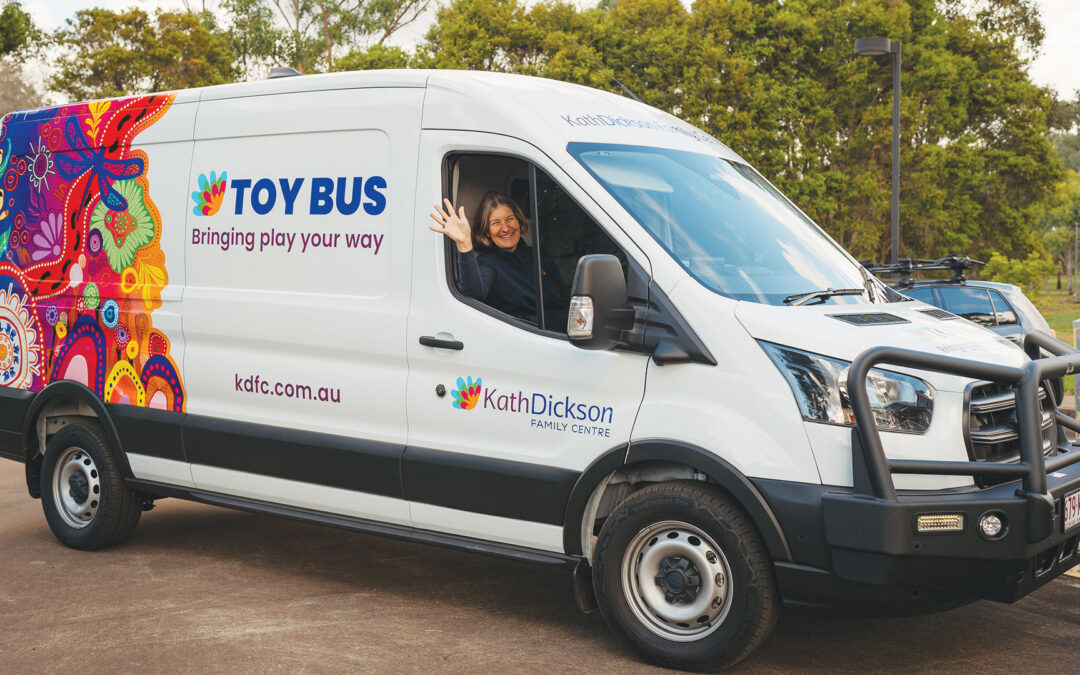
That’s one of the reasons, in 2025, we established Queensland’s only mobile toy library service.

Our Toy Bus travels across the Darling Downs and South West regions (an area spanning more than 400,000 square kilometres) visiting communities including Charleville, Roma, Cunnamulla, Eulo, Thargomindah, Quilpie and Cooladdi.

The bus was designed to bring quality educational toys and play resources directly to families who would otherwise have limited access. But it has also done something incredibly important: it has helped communities identify their own local champions.

Charleville is the perfect example.

A community-led vision

Two local parents had already been dreaming about establishing a toy library in Charleville long before we arrived with the Toy Bus. Once the mobile service started visiting, those ideas gained momentum. Through their passion and persistence, local supporters identified a venue, gathered volunteers and rallied community organisations behind the project.

That community support has been remarkable.

The Charleville Lions Club generously offered the venue rent free. Local organisations including Lifeline, FGP Moreton childcare centre and the Charleville Men’s Shed have all expressed interest in supporting the service. Families have volunteered their time, spread the word and embraced the concept wholeheartedly.

This is exactly how strong community projects begin, with local people recognising a need and working together to create something meaningful.

Why toy libraries matter

Toy libraries offer families affordable access to quality educational toys, games and learning resources without the expense of constantly purchasing new items as children grow and interests change. For families living remotely or on tight budgets, that access can make a real difference.

Charleville is also home to many temporary workers across education, health, local government and community programs. Many families relocate to the region for several years while leaving much of their belongings in storage elsewhere. A toy library provides a simple, practical way for those families to access toys and support children’s development during their time in the community.

But the benefits go far beyond toys. Toy libraries help reduce household costs, save space in homes and minimise waste by encouraging borrowing rather than buying. In communities without recycling facilities, reducing landfill becomes even more important.

They also create opportunities for families to connect. Parents meet while borrowing toys. Volunteers build friendships while helping run sessions. Children experience new play opportunities that support learning, curiosity and development.

That sense of connection is one of the most valuable outcomes of all.

A model for other communities

One of the things I’m most excited about is that Charleville could become a blueprint for other regional and remote communities across Queensland.

The toy library’s location is significant because Charleville sits at the centre of the Toy Bus loop through South West Queensland. Families from surrounding farming properties and distance education families will also be able to access the service more regularly.

Importantly, the Charleville Community Toy Library will continue to be run locally by volunteers, while Kath Dickson Family Centre provides governance support and assistance behind the scenes.

That local ownership is critical to long-term success.
Research also shows that toy libraries create substantial community value. Social impact reporting has demonstrated that for every $1 invested in toy libraries, communities receive an estimated $4.22 in social return through social, environmental and economic benefits.

Looking ahead

My hope is that the Charleville Community Toy Library becomes a genuine hub for family connection and community involvement.

I hope it is a place where families feel welcome, children feel excited and volunteers feel proud of what they are building together.

Most of all, I hope this is only the beginning.

If you are in Charleville or travelling through the region, we would love to welcome you to the official opening on Saturday 25 July 2026 at 10am at the Lion’s Den, 47 Hilda Street.

Come and see your community toy library in action. Bring toys to swap, learn how it works, meet the volunteers, or join on the day and start borrowing straight away.

For more information, visit www.kdfc.com.au/charleville-toy-library or follow our Facebook page.

Sustainable play and the magic of toy libraries

Sustainable play and the magic of toy libraries

This November, families in the Toowoomba region have a chance to celebrate World Sustainable Toy Day 2025 at the Kath Dickson Toy Library — and discover how the simple act of play can shape a more sustainable future for our children.

Why sustainable play matters

From the moment children begin to explore the world, play is how they learn, create, and connect. It’s also one of the first ways they experience consumption — and that’s why starting sustainable habits early matters.

In Australia, the average child owns more than 100 toys, yet many end up broken, unused, or discarded long before their potential is realised. Sustainable play teaches children that joy and imagination don’t depend on buying new things — they come from curiosity, creativity, and connection.

When we show our children that fun can come from sharing, reusing, and repurposing, we nurture both their environmental awareness and their sense of community. It’s not just play — it’s a powerful lesson in caring for the planet and for each other.

The magic of creative, conscious play

Sustainable play begins with creativity. A cardboard box can become a rocket ship. An old yoghurt tub can transform into a drum. Recycled materials — from bottle tops to fabric scraps — invite children to dream, problem-solve, and build their own worlds.

This kind of open-ended play builds imagination, resilience, and confidence — essential skills for young children in their early years.

Why Toy Libraries matter

Toy libraries are at the heart of sustainable play. They give families the freedom to enjoy variety and discovery without the waste or the cost.

Here’s why families love being part of a Toy Library:

🌱 It’s sustainable. Borrowing instead of buying means fewer toys in landfill and more resources shared within the community.
💰 It’s affordable. Access a wide range of quality toys without the financial pressure of constantly purchasing new ones.
🧸 It’s educational. Toy libraries carefully select toys that promote learning, creativity, and skill development through play.
👨‍👩‍👧 It’s community. Families connect, share experiences, and find support — creating a network of like-minded parents who value both play and the planet.
🔍 It’s practical. Try out toys before you buy, helping you discover what truly engages your child.

As our Toy Library Coordinator, Trish Mullins, explains:

“We want families to see that you don’t have to buy new toys to have fun. With a few recycled bits and a big imagination, you can create something wonderful together — and help the planet at the same time.”

Come and celebrate with us

Join us for a hands-on, family-friendly event that combines creativity, sustainability, and community. We’ll be crafting toys from recycled materials, sharing play ideas, and enjoying a relaxed morning tea together.

Event details:
🗓 Friday 21 November 2025
🕤 9.30am – 11.30am
📍 Kath Dickson Toy Library, 1 Littleton Street, Crows Nest
💰 Free | Morning tea provided

Whether you’re a long-time Toy Library member or curious to learn more, this is the perfect opportunity to see how borrowing toys can inspire big imaginations and small footprints.

Let’s show our children that play can be fun, imaginative, and kind to the planet!

Celebrating community kindness: A heartfelt thank you to the Toowoomba Women’s Shed

Celebrating community kindness: A heartfelt thank you to the Toowoomba Women’s Shed

At Kath Dickson Family Centre, we are continually reminded of the incredible generosity that exists within our local community—and this week was no exception.

Our team at Kath Dickson Toowoomba Central were absolutely delighted to receive a beautiful donation of hand-crafted toys and dress-up costumes from the wonderful members of the Toowoomba Women’s Shed. Their thoughtful gifts have brought an extra spark of imagination and joy to the children in our care.

From colourful costumes to lovingly made wooden toys, the new additions have already become favourites in our play spaces. The children have been busy dressing up, building, exploring, and creating—all the while developing their confidence, social skills, and creativity through play.

These kinds of donations don’t just add to our resources, they deepen the connections between generations and show our children the true meaning of community. Knowing that these items were made and shared with such care and purpose makes them even more special.

To the Women’s Shed, we say thank you. Your generosity and kindness have made a real difference, and your contribution will be treasured by many little hands and hearts for a long time to come.

We feel so fortunate to be part of a community that values connection, creativity, and care.

FREE RESOURCE Pattern Cards

FREE RESOURCE Pattern Cards

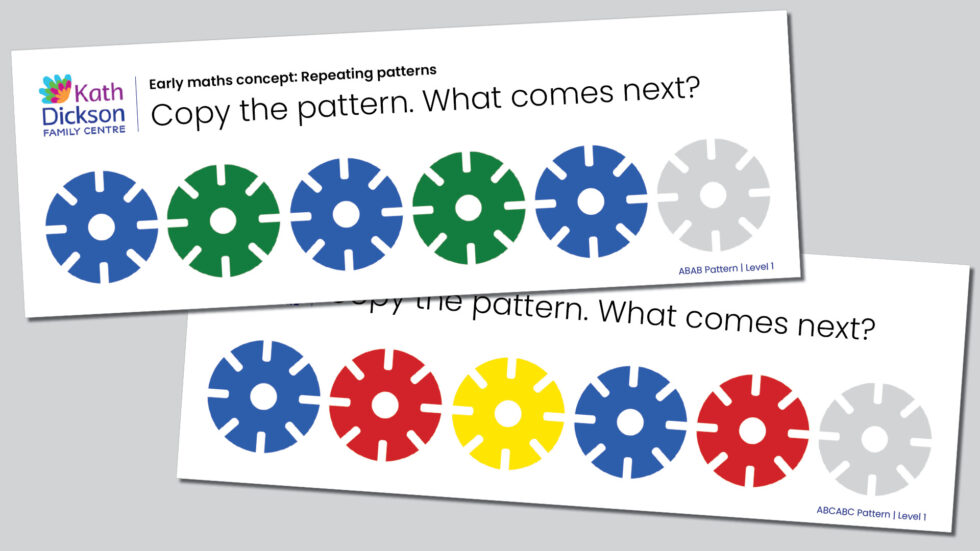
Looking for a fun and educational activity for your pre-schooler? Download our free PDF resource that uses the slotted flower construction toy to help children practice copying, continuing, and creating their own repeating patterns!

Copying, continuing, and creating patterns are essential building blocks for early maths skills. Patterns help children understand sequences, predict outcomes, and develop problem-solving abilities.

Through copying, continuing and creating patterns, they develop the following skills:

  • Copying patterns. When children replicate patterns, they’re practicing observation and attention to detail.
  • Continuing patterns. Extending a pattern sharpens their ability to recognise regularities and make predictions
  • Mathematical Thinking. As they draw, children naturally engage with concepts like symmetry, size, and proportion, linking art with foundational maths skills.

Download the Flower Pattern Card >>

These cards are perfect for building early math skills — all while having fun! Simply download, print, and watch your child’s creativity and learning bloom!

Why we don’t like colouring-in

Why we don’t like colouring-in

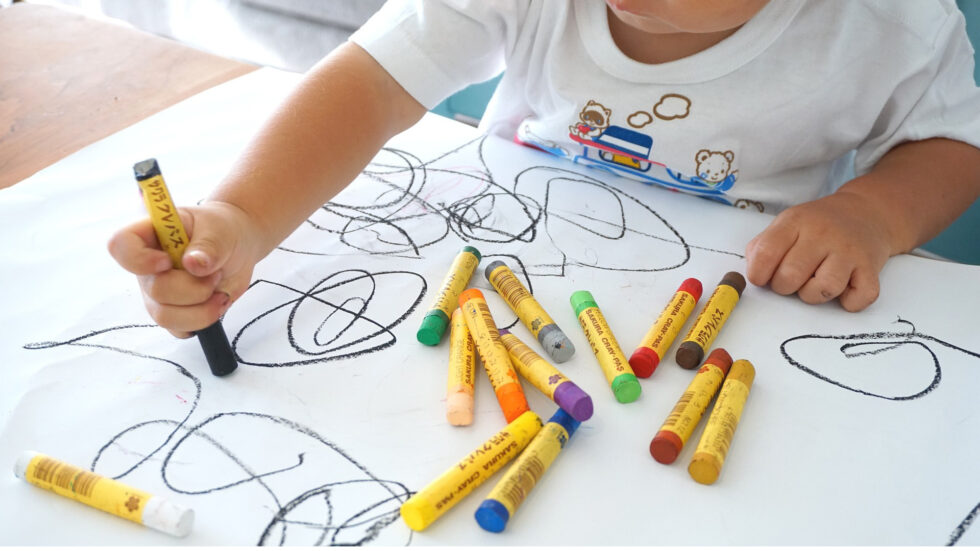
In this blog post we look at why colouring inside the lines of pre-printed colouring-in sheets could be holding your child back—and what to do instead!

While colouring-in, where children fill in pre-drawn outlines, can help with fine motor skills, it often leads to a focus on staying within the lines rather than exploring their own ideas and creativity. In this way, colouring-in activities can limit childrens’ creativity and self-expression.

When children engage in open-ended activities like free-drawing or painting, they make decisions about what to create and how to do it. This encourages critical thinking and problem-solving, which are essential skills in both early childhood education and later academic success.

Every child sees the world differently, and open-ended art activities allow them to express these unique perspectives. Instead of focusing on replicating someone else’s design, children are free to explore their ideas, which is more meaningful and developmentally appropriate.

In early childhood, the process of creating is far more valuable than the final product. Open-ended art activities help children learn that it’s okay to make mistakes and that there’s no “right” way to create art, fostering resilience and a love for learning.

Here are some practical ideas that you can incorporate into your daily routine:

  • Provide a simple still life setup, like a bunch of flowers, and encourage children to draw what they see.
  • Discuss the shapes, sizes, and patterns they notice in the flowers, integrating vocabulary that supports their understanding of maths concepts.
  • Celebrate childrens’ creativity and the different ways they represent the same objects.

Let’s encourage creativity beyond the lines!

Download the Drawing Infosheet >>

The importance of Book Week in early childhood

The importance of Book Week in early childhood

Ah, Book Week—a time of excitement, creativity, and, let’s be honest, a bit of last-minute costume scrambling!

Whether you were the child dressed as a beloved character or, more recently, the parent hunting for costume ideas at the eleventh hour, Book Week holds a special place in our culture. But beyond the fun and costumes, Book Week has a much deeper significance in the development of young minds. So what is the importance of Book Week, particularly in early childhood?

Fostering a love of reading
Book Week provides an opportunity to introduce young children to the joys of reading in a celebratory and engaging way. By participating in reading activities, storytelling sessions, and book-themed events, children begin to associate reading with pleasure and adventure, laying the foundation for a lifelong love of books.

Enhancing language and literacy skills
Reading is a cornerstone of early childhood education, and Book Week plays a crucial role in enhancing language and literacy skills. Through exposure to a variety of books and stories, children expand their vocabulary, improve comprehension, and develop phonemic awareness. The rhythm, rhyme, and repetition found in many children’s books also aid in language development, making reading both a fun and educational experience.

Building imagination and creativity
Books are gateways to imagination, and Book Week allows children to explore new worlds, ideas, and perspectives. As they listen to or read stories, children learn to visualize characters, settings, and events, which stimulates their creativity. Dressing up as their favourite book characters or re-enacting scenes from stories further encourages imaginative play, an essential aspect of early childhood development.

Promoting cultural awareness and inclusivity
Book Week often features stories from a wide range of cultural backgrounds. By exploring books that reflect different cultures, traditions, and experiences, children gain a broader understanding of the world around them. This not only promotes inclusivity but also helps children appreciate the richness of Australia’s cultural tapestry, fostering empathy and respect for others.

Strengthening the bond between educators, families, and communities
Book Week is a time when educators, families, and communities come together to celebrate reading. Whether it’s through shared reading sessions, book parades, or community events, Book Week strengthens the connection between home and early learning environments. When families get involved, children see the value of reading both at home and in their educational settings, reinforcing positive reading habits.

So, while dressing up your child as their favourite character is undoubtedly a fun challenge, Book Week is about so much more than costumes. It’s about nurturing the readers of today and shaping the thinkers, dreamers, and creators of tomorrow. As educators and parents, we will continue to make Book Week a special time for our children, filled with stories that inspire, educate, and bring joy.

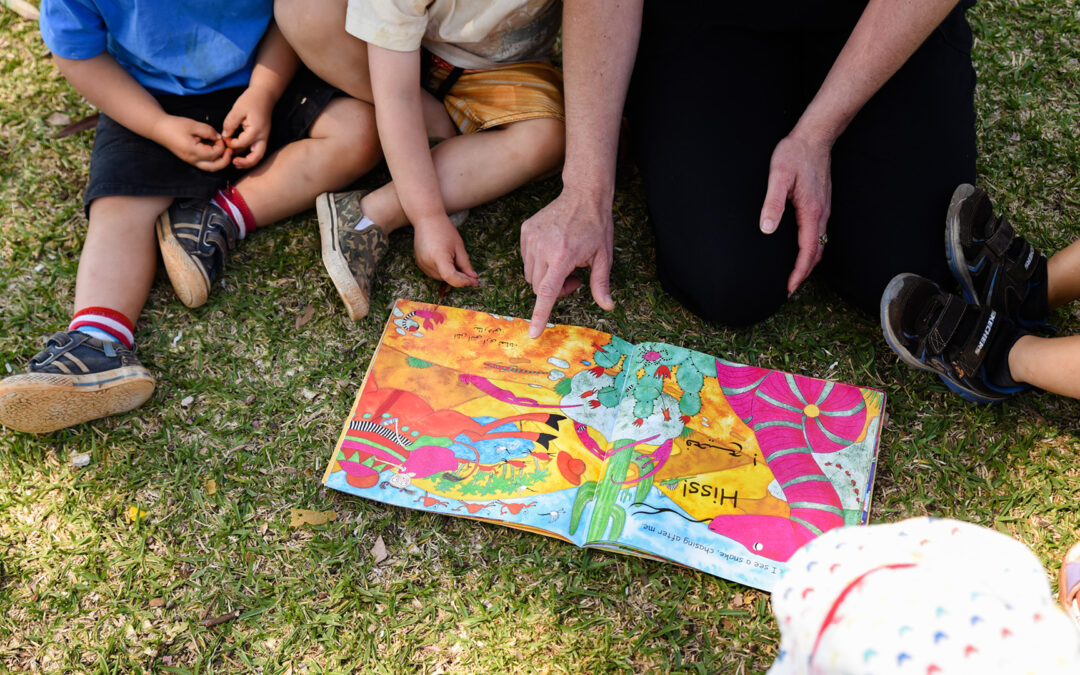
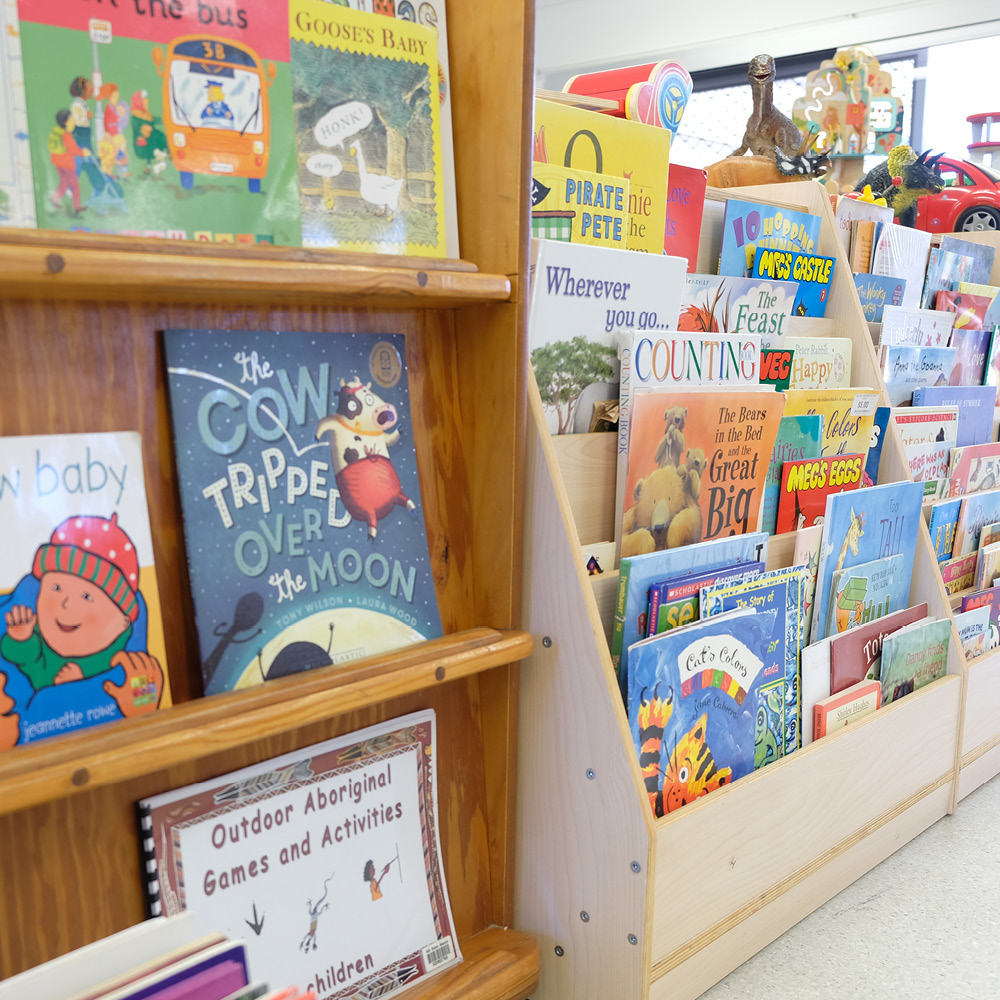
If you’re looking for some new books to add to your collection, check out the winners of the 2024 CBCA Book Of The Year Awards. Or you can choose a pre-loved treasure off our Toy Library’s book swap shelf.

Books available at the Toy Library
TOY LIBRARY
DID YOU KNOW…?
Our Toy Library in Crows Nest has a free library / book swap. No need to be a member, just pop in and take a book home!